Showing posts with label Mythbuster. Show all posts

9.21.2011

$5 Challenge

I had looked forward to Slow Food USA's $5 Challenge for weeks. Partly because I was excited to get some of my closest foodie friends together, also because I knew it would be a delicious feast, but mostly because I corralled my foodie friends together for some delicious food that cost (+/-) $5 each!

As I had hoped, it was an evening with good friends, good food, good wine, and good times. Now I have to add a new "good"- good intentions! It proved that eating well doesn't have to cost an arm and a leg. Although we did end up with a bunch of carbs and starches, I'm confident that we'll get more creative in making well-rounded dishes as we practice more with $5 Challenges.

9.16.2011

Mythbusting

Original work. Background from lifelessnormal.com
Here it is. My first post as a registered dietitian. Wow. I need to moment to process this.

Many might think that as a RD, I just tell people what to eat and stay an arm's length away from. I've been thought of as a food police, nutrition nut, and someone who "hates red meat and loves V8" (someone did say that, verbatim). Through working as a nutrition educator, I realized I'm a mythbuster more than anything else. My worst enemies are those who think they have 2 cents about nutrition and crank out unscientific, fru fru advice. Then I have to go in and clean up their verbal poo. To those folks: STOP IT.

3.17.2011

Dollar 'n Sense #1: Farm to Table

We've all heard it (and possibly experienced it): It's expensive to buy food at farmers markets.

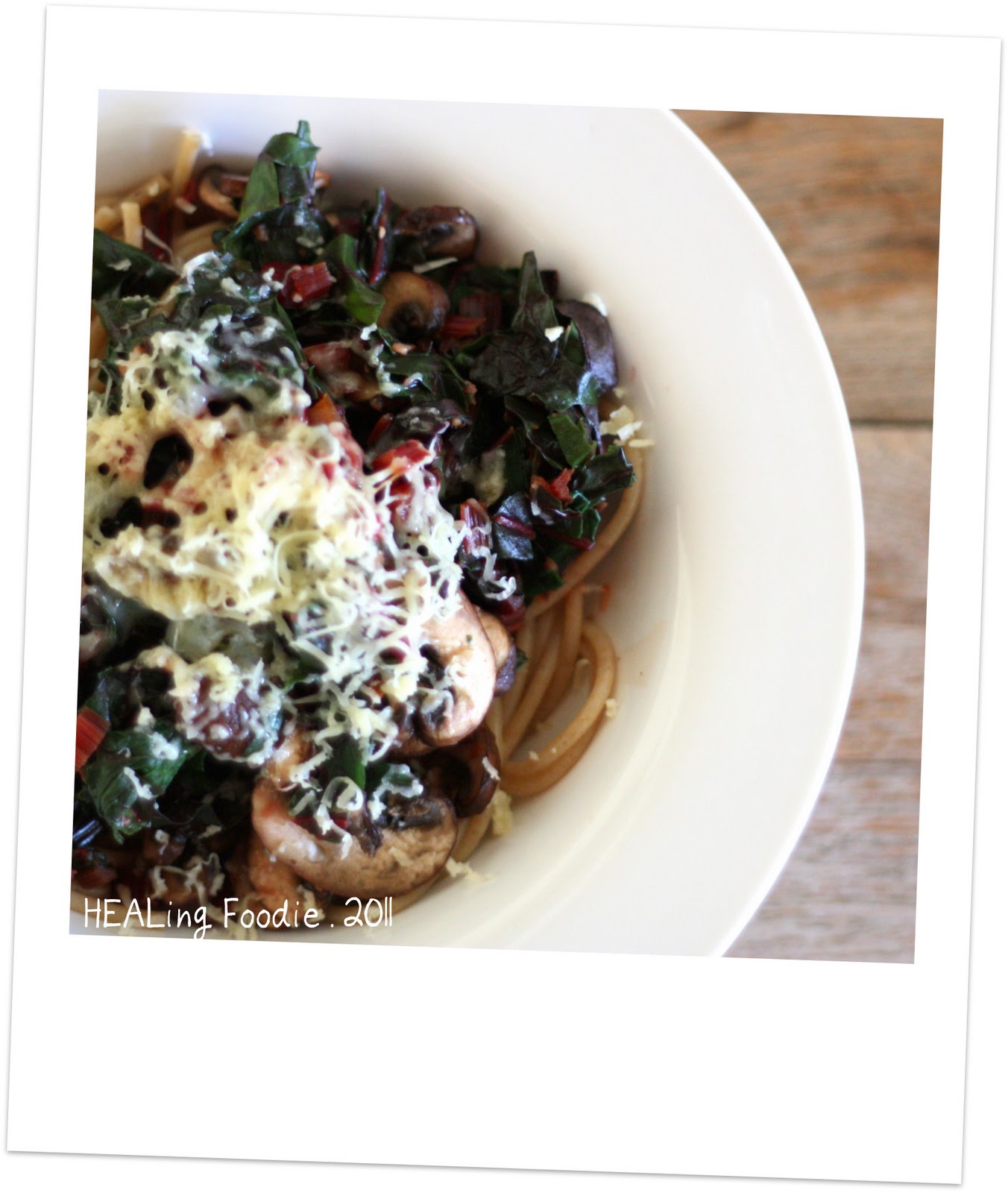
Yes, there are produce that cost more than what we wish to pay. But more often than not, they're more reasonable than you might think. Take my red chard and mushroom that became a delicious and nutritious pasta dish, for example.

9.02.2010

Celeb Nutritionism


I regard most nutrition advice from celebs like financial advice from Lehman Brothers. While indulging my guilty pleasure on PerezHilton.com today, I came across this gem from the beautiful Kelly Osbourne:
"I've completely changed the way I eat since doing Dancing With The Stars. A trick I've learned is to eat just a little bit of something that has no carbs and no sugar in it before you go to sleep because it keeps your metabolism going. They say you should never eat before you go to bed, but I've found just having a tiny little snack - like half an apple or something like that - before you go to sleep really helps."
Never is a very strong word. If hungry, it's a good idea to nibble on something even if it's within an hour of going to sleep. Moreover, people with diabetes should have a bedtime snack so their medication is not going to induce hypoglycemia (low blood sugar) while they sleep. 

Also, apples are primarily made up of sugars (hence carbs). There is fiber but definitely no fat and protein. Apples and other fruits are terrific bedtime snacks, and I'm glad Ms. Osbourne is making good snack choices. But to go on record and say there are no carbs and sugar in apples? That cannot be more misleading

There is a reason why celebrities look good. Their career hinges on their appearance. If we had personal trainers and chefs and consultants for this and that plus airbrushing for every blemish, I'm sure most of us will look pretty darn faboosh, too. 

8.23.2010

Eggs-plained


In light of the ginor-mongous recall on eggs issued last week, CNN's Eatocracy published a great article that "eggs-plained" the 3 types of eggs available to us. I added a couple other types to cover what we might encounter at supermarkets.

Free Range:
"The USDA does not specify the quality or size of the outside range nor the duration of time an animal must have access to the outside or the amount of space available to them, and there is no mandate that the chickens are fed organically or are hormone and antibiotic-free.
While some egg producers are truly free-range, and the chickens remain outdoors for a good deal of the time, there is nothing preventing a factory farm from labeling eggs as free range, merely because the structure in which the chickens live has a door to an outside yard.
As author Michael Pollan notes in 'The Omnivore's Dilemma' ..."Since the food and water remain inside the shed, and since the little doors remain shut until the birds are at least five weeks old and well settled into their habits, the chickens apparently see no reason to venture into what must seem for them an unfamiliar and terrifying world." There's a very good chance that a free-range chicken, raised for either eggs or meat, has never seen the light of day." 
Cage-free:
"There isn't a legal designation eggs as cage free. Many factory farms keep their laying hens in so-called "battery cages" - typically rows and rows of wire cages in which chickens are given insufficient room to accommodate their wingspan.
In a cage-free facility, battery cages are not used, and typically a hen will have enough room to walk around and extend her wings, but the facilities may still be crowded, and birds may still be "debeaked." This entails the trimming of a portion of a bird's beak in order to combat cannibalism and feather pecking that may occur among birds kept in close quarters.
In July, California Governor Arnold Schwarzenegger signed A.B. 1437 into effect, making California the cage-free state in the US."
Organic:
"For eggs to be labeled "organic,"... [hens] must be fed organic feed - no animal byproducts or genetically modified or "GMO" crops - produced on land that has been free from the use of toxic and persistent chemical pesticides and fertilizers for a minimum of three years.
The hens themselves must be maintained without hormones and other intrusive drugs and antibiotics may only be used in cases in cases of outbreak or disease. They're also kept in a cage-free environment and allowed access to the outdoors."
"Designer":
Gucci, YSL, and the likes haven't tapped into the egg industry (monogrammed eggshells?). Designer eggs, also known as value-added eggs, are those that have been designed and modified to contain more nutrients. The most common being omega-3 or vitamin E added eggs. Keep in mind that the chicken feed only increases "boosted nutrients" in the yolk. So if you're a "yolk tosser", splurging on designer eggs is simply money down the drain.
Brown vs. White:
The age old debate. Nutritionally, there is no difference between brown eggs and white eggs. The colors only indicate the breed of the hen. Brown eggs tend to cost more because they're usually from larger hens that eat more but produce fewer eggs.
To avoid getting foodborne illness from eggs, rinse all eggs when you bring them home from the store. Then keep them on fridge shelves (as opposed to the side door) where the temperature doesn't fluctuate as much. Of course, thoroughly cook both egg whites and yolks to kill all bacteria.

Quoted excerpts from CNN's food blog Eatocracy. Visit the site for the article in its entirety.

Photo credit: timyoung.net 

8.19.2010

False Advertisements


While I prefer Pinkberry over other franchises when it comes to getting a frozen yogurt fix, the blatant pseudo health claim plastered on the window of this store is making me think twice about giving them my money.

Whether the yogurt tastes like it's overladen with sugar is subjective. Everyone's taste preferences are different, and some of us have higher tolerance for sweets. But nutritionally speaking, frozen yogurt from Pinkberry or any other place that has spawned due to this craze is still very sugary.

In a small yogurt, you can expect to find 30 grams of sugar. That's roughly 7 teaspoons of the the white stuff.* For a medium and large, there are 46 grams (11.5 teaspoons) and a whopping 76 grams (19 teaspoons) of sugar, respectively. And this is before any toppings are added, most of which are fairly sugary. To put these numbers into perspective, a regular can of cola has about 40 grams of sugar- 6 grams less than that of a medium yogurt. So much for being not overladen with sugar

The tartness in these frozen yogurt make them seemingly less sweet. If we're aiming for the benefits of probiotics or "good bacteria", we're better off just eating store-bought plain yogurt. But one (and only) reason that Pinkberry deserves applause is for the absence of high fructose corn syrup (HFCS) in their yogurts. This franchise has remained one of the few that keeps HFCS out of the ingredients.

Visit Pinkberry's website for more nutrition info about your favorite flavor of frozen yogurt.

The above sugar content was calculated with the nutrition facts for the original flavor. 

* 4 grams of sugar = 1 teaspoon

8.04.2010

Supplement's Dirty Dozen


The obsession with supplements in America started with seemingly innocent multi-vitamin and mineral pills. Then herbal supplements came into the picture and boasted magic bullets like improving memory and energy. Dramatic increase in supplement usage came when people started taking them for weight loss, muscle gain, and the whole nine yards. Nowadays, the supplement isles in markets stretch as far as the eye can see, and consumers are purchasing ginormous bins of these pills at discount warehouses. 

But there's a bit of a problem- there is no governing body that regulates these supplements.  Somehow, they got a special pass to skip FDA inspections. No fact check against these health claims, and there isn't much supporting evidence for the exaggerated health benefits that are becoming ingrained in consumers' minds. 

Once used to describe the 12 fruits and veggies that contain the most pesticides, the phrase "dirty dozen" has now transcended into the supplement realm.The 12 most harmful substances that are often found in these pseudo-nourishment are now given the same foul label.

Nutrition should be coming from fresh foods that we can recognize, not plastic bottles that have childproof caps on them. If they warrant such safety precautions, supplements are probably much less healthful (and actually harmful) than we believe them to be. 

For more supplement safety details, visit the pages on nsf.org and fda.gov. Full article on supplement's "Dirty Dozen" can be found at msnbc.com.

7.26.2010

Meatless Monday: Super Seed

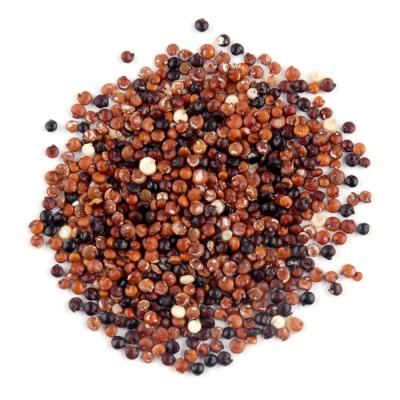
Having fallen in love with quinoa (keen-wah) for a few months now, I've just learned that it's actually a seed, not a grain! (shame on markets mislabeling this seed with "whole grain quinoa" labels) These super seeds come in black, red, and white. But are there differences between different color of quinoa?

Aside from offering lots of fiber and protein (see Meatless Protein), quinoa also contains B vitamins, calcium, iron, and phosphorus. There aren't significant differences between the colors so just choose the color that fancies you the next time you shop for this amazing meatless protein! Quinoa is also gluten-free by nature, making it a nutritious option for those who are gluten-intolerant or have Celiac's disease.

As far as taste goes, I prefer red and black quinoa over the white variety because they have a nuttier flavor. Texturally, the red and black seeds are chewier than their white counterpart. Quinoa can be served as a side dish, in salads, or even eaten as a breakfast cereal!

Thanks Alison W. for provoking my curiosity about different colored quinoa!

Fun fact: The word quinoa meaning "The Mother Grain" originated from Quechua, the language of the indigenous people of South America.


Photo credit: chieftainwildrice.com

7.22.2010

Smart (aka Deceptive) Labeling

Just when you think you're getting the hang of reading labels, food manufacturers throw you a curve ball and makes food labels even more confusing to decipher.

A recent inquiry to Kellogg's® by a fellow health educator revealed a surprisingly contradictory practice from an answer that didn't really, well, answer anything. Before, the label for these cereal bars didn't separate the ingredients for the crust and the filling. Now, all packages of Nutri-Grain® Cereal Bars look like the one above. When my fellow health educator emailed the company and asked about the change, she was replied with the following:
Thank you for contacting us regarding Kellogg's® Nutri-Grain® Cereal Bars. There has not been a change in the Nutri-Grain formula since 2008 when more whole grains were added to the crust.
As far a the weight of each component, we do not have that information readily availabe but I would think that the filling would be more dense and weigh more than the crust.
I hope these answers helped address any concerns you may have about Kellogg's® Nutri-Grain® Cereal Bars. If you have any additional questions or concerns, simply reply to this email or contact us at 1-800-962-1413.
Thanks again for writing us. We appreciate your interest in our company and products.
          Sincerely, 
          Jill DeLong
          Sr. Consumer Specialist
          Consumer Affairs Department


The rule for listing ingredients is that they are listed in order by weight from the most to the least amount used to make the food. If even Kellogg's
® believes that the filling weighs more than the crust, then why on Earth is the crust's ingredients listed first? 

For label-savvy consumers, seeing "whole grains rolled oats" as the first ingredient is a lot more appealing than "high fructose corn syrup." Capitalizing on this fact, food manufacturers decided to separate the components of the same food item (i.e. crust and filling) so their products can be seemingly healthy. If you've eaten one of these cereal bars, you would know how unappetizingly sweet they are- all thanks to the FIVE kinds of sugar in this one little bar!

Special thanks to Suzy S. for challenging Kellogg's® and sharing the response on Healing Foodie!

7.20.2010

A Healthy Choice at Baskin-Robbins

Baskin-Robbins is home to some calorie monstrosities such as the Snickers Sundae (1000 calories, 46g fat, 710g sodium, and 113g sugar).

On the other end of the spectrum, I've found one of the most satisfying and healthful ice cream around town at the same place that offers the junkiest of frozen treats. The Cabana Berry Banana ice cream (150 calories, 6g fat, 7g sugar) is reduced fat with no sugar added. Granted it's no artisanal, hand-packed deliciousness, this guilt-free ice cream is definitely a cooling treat on a balmy summer night.

And a shameless plug for Huntington Hospital's Blood Donor Center: come donate a pint and get a pint of Baskin-Robbins in return! You will receive a BR certificate along with a heap of goodies. So come on by or call to make an appointment to save a life today!
100 W. California Blvd. Pasadena, CA 91105
626.397.5422
(Parking will be validated)

Photo credit: foodbeast.com

7.16.2010

The Story of Bottled Water

Ever wondered about where that plastic water bottle is going after you discard it? Or how much energy it takes to produce these disposable containers? Watch the amazing Anne Leonard explain our nation's obsession with bottled water and  how silly they really are.


Not only are bottled water an unnecessary modern convenience, millions of bottles from sports drinks, "enhanced" waters, and iced teas also contribute to this problem everyday. As Annie said during an interview, "Let's have a little more appreciation and reverence for the stuff we have instead of this mindless consumerism."

To learn more about The Story of Bottled Water and other Stuff, visit thestoryofstuff.com.

7.06.2010

The Green Paradox


The definition of "green" and "natural" has no legal bearing. So when companies slap those words onto their packaging, it's up to the consumer to determine that with subjectivity. Not only is this true for cleaning supplies, this is also the case for food.

While it's a good trend that companies like Clorox are manufacturing less harmful cleaning agents, the purpose is defeated if synthetic dyes and fragrances are still allowed to be in these "green" cleaners. Not to mention that such marketing is absolutely deceptive to the public.

Toxic chemicals surround us everyday, and chances are they're lurking in our cleaning supplies too.Our planet is counting on us to vote with our dollars and support companies that are truly green, not the ones that are just paying us lip service.

5.26.2010

Drink This, Not That

Sodas have been pointed to as the culprit of obesity and diabetes for years, but unhealthful drinks can run the gamut of the obvious calorically-dense ice cream shakes to the seemingly wholesome vitamin-infused waters with antioxidants. So where are these "liquid meals and some more" lurking around?


David Zinczenko, author of the Eat This, Not That series, has compiled a list of 20 drinks in America that are most detrimental to our health. Some are overt health hazards while others are cans of sugar in clever marketing disguise. Sugar content of each drink is compared to sugary snack foods and desserts side by side in photos for a stunning visual effect.

Check out the 20 Worst Drinks in America at menshealth.com and learn how to avoid gulping down a whole week's worth of sugar in one sitting.

Photo from eatthis.com

2.26.2010

Do You Know Your FBS?

Most of us are familiar with checking cholesterol levels in a blood test before. But what about fasting blood sugar (FBS) test?

Glucose, or blood sugar, is a type of sugar that is used by the body. It is referred to as blood sugar because it's the body's main fuel. While it's normal for blood sugar to go up after meals, the problem arises when it remains elevated even when eating hasn't occurred (aka fasting). Having constantly elevated glucose level can lead to damage in the eyes, nerves, kidney, and blood vessel that is sometimes irreversible.

The prevailing myth about Type II diabetes (formerly known as adult onset diabetes) is that diabetic individuals get the illness by eating too much sugary foods. Although this may contribute to the onset, consuming too much sweets doesn't cause diabetes. The body is simply burnt out from keeping up with the blood sugar rollercoaster. Insulin is a hormone that regulates blood sugar. Diabetes results when insulin is either not produced at all or is produced in insufficient amounts.

Another myth about diabetes is that people with the illness cannot eat carbs. The truth is people with diabetes can consume carbohydrates but in limited amounts. It fact, carbs are essential. Diabetic and non-diabetic individuals should keep in mind the type and the amount of carbs when choosing them. Also, carbohydrates isn't the same as table sugar. Just because a food doesn't taste sweet doesn't mean it doesn't contain carbs. Crackers, rice, oatmeal, and potatoes are some common foods that don't taste sweet but do contain lots of carbs. 

Traditionally, Type 2 diabetes affect people who are overweight or obese. However, a great majority of Asians who are diagnosed with it aren't very overweight. In fact, their BMI, or body mass index, is sometimes within normal range. This makes it more difficult to watch out for signs of diabetes. Unfortunately, it also gives the illusion that "everything is working A-okay in the body" when it isn't so.

Symptoms of diabetes aren't apparent until the body is close to losing the battle. If you haven't had a fasting blood sugar (FBS) test, today is the day to talk to your doctor about it!

For more info, feel free to leave a comment or email me. Visit WebMD for "10 Myths about Diabetic Diet Plan".

2.22.2010

Bottled Water: Pure Water or Pure Nonsense?

Bottled water is a modern convenience that comes at a great cost to your wallet and the environment. Even if you're willing to shell out dough for it, is it really worth the outrageous price?

A common belief about these bottled conveniences is that they're safer than tap water. This cannot be more wrong. Millions of dollars are spent on promoting and marketing the (mis)perception of purity each year. The reality is "bottled waters do not have to be tested as rigorously as tap waters or disinfected to the same extent" as renowned author Marion Nestle wrote in What to Eat. On the other hand, water that comes through your kitchen faucet is regulated by the government and state.


For those who are interested in the math, tap water costs roughly $0.003 per gallon. More "affordable" brands like Dasani costs $5.28 per gallon. "Luxury water" like Voss costs $15.56. And we complain about the rising gas prices? This is beyond ridiculous as most bottled water is just repackaged tap water with a few minerals thrown in

Moreover, the manufacturing, transporting, and disposing of the bottles come at a great cost to the environment. Oil is required to make plastic bottles and to truck them to stores. After the water has been consumed, 9 out of 10 bottles are thrown away and not recycled.


While tap water may not pure, neither are most bottled water. Installing or purchasing a filter for your home or office can take care of most unwanted particles in tap water. Using a reusable container like Nalgene or Klean Kanteen can save you money, reduce environmental damage, and ensure you're always properly hydrated. 


If you're concerned about the quality of drinking water in your city, visit EPA's Web site.